Christmas: 25% off All ltems · Code AFJ25 ·Ends Dec 30 30% off All Items ·On Orders Over $600 – Code AMANDA30
Stackable Rings for Short Fingers: What Works Best
Stackable rings can look refined and intentional, but on short fingers, the wrong combination can easily feel crowded. The issue is rarely the rings themselves—it is how proportion, spacing, and direction work together on the hand. When stacking is done thoughtfully, it can create a cleaner line, draw the eye upward, and subtly lengthen the fingers. This guide focuses on what truly works for short fingers, breaking down the styles, shapes, and details that help ring stacking feel balanced rather than overwhelming.
What Defines Short Fingers in Ring Styling
In ring styling, short fingers are defined more by proportion than by actual size. Fingers may appear short when their length is visually close to the width of the knuckle or palm, or when the joints are fuller and the finger lacks visible taper. A low contrast between finger length and hand width can also make stacking rings feel compressed. From a styling perspective, this means horizontal elements—such as wide bands or bulky details—tend to dominate, while vertical lines are less noticeable.
The Core Principle: Creating Vertical Flow, Not Width
When stacking rings on short fingers, the direction in which the eye moves matters more than the number of rings worn. Designs that pull attention upward along the finger tend to feel lighter and more balanced, while elements that spread outward interrupt that line. Wide bands, heavy textures, and horizontal details break the visual flow and make the finger appear shorter. In contrast, narrow bands, elongated stone placements, and subtle spacing allow each ring to sit in sequence rather than compete for space. The stack reads as a single vertical composition instead of several separate pieces pressed together.
Best Stackable Ring Styles for Short Fingers
Slim Bands That Keep the Look Light
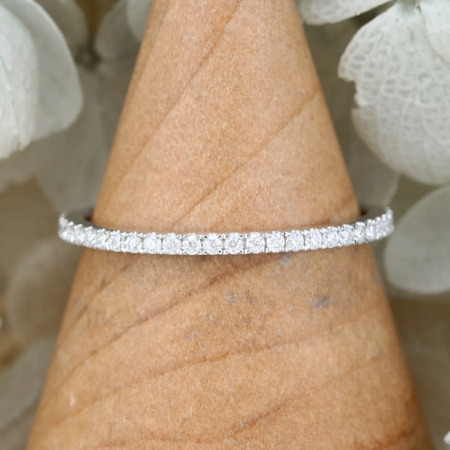
Slim bands are often the starting point for ring stacking on short fingers because they occupy minimal visual space. A narrower band allows the finger itself to remain visible between rings, preventing the stack from feeling dense or top-heavy. Thin profiles also make it easier to layer multiple pieces without creating sharp breaks across the finger. Whether polished or subtly textured, slim bands tend to sit closer together and read as part of a continuous line, which is why they are commonly used as base rings in stacking combinations.
Elongated Stone Shapes That Add Length
Stone shapes with an extended silhouette introduce a clear vertical direction to a ring stack. Cuts such as marquise, pear, and oval draw the eye along the length of the finger rather than across it, which changes how the stack is perceived as a whole. When used in smaller sizes, these shapes integrate more easily into layered combinations without dominating the hand. Positioned as the focal ring within a stack, elongated stones create a sense of flow that works with slim bands above or below, keeping the overall look structured rather than compact.
Contour and V-Shaped Rings That Follow the Finger Line
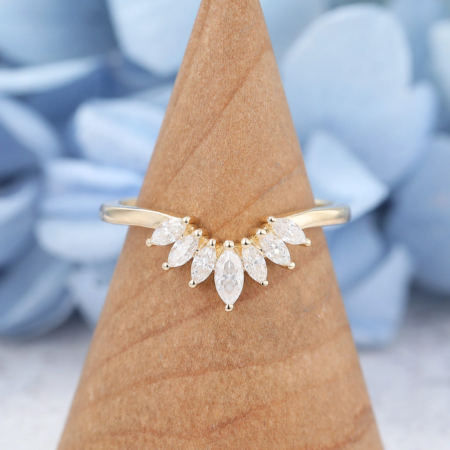
Contour and V-shaped rings are designed to curve or angle along the natural line of the finger rather than cutting straight across it. In a stack, these shapes tend to sit closer to the main ring, reducing visual gaps and keeping the composition compact. The gentle curve or pointed dip creates movement along the finger, which works well on shorter fingers where flat, straight bands can feel abrupt. When layered with slim bands or a small center stone, contour and V-shaped rings help the stack feel connected instead of segmented.
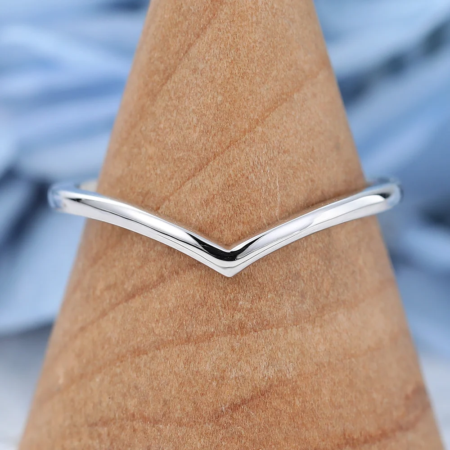
Minimal Accent Rings for Subtle Sparkle
For short fingers, rings with minimal accents create an elegant, elongated look without overwhelming the hand. Thin bands with small, delicate stones or subtle engravings maintain a clean visual line, making fingers appear longer. Avoid bulky designs, as they can shorten the appearance of the fingers and draw attention away from the overall hand shape. Choosing stackable rings with modest sparkle allows layering without crowding the finger, enhancing sophistication and versatility. Light-colored metals, such as white gold or platinum, also contribute to a seamless, elongating effect.
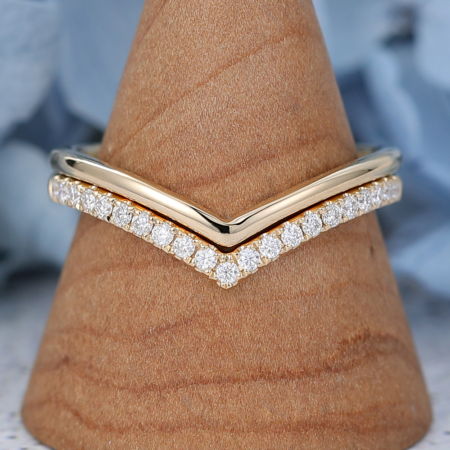
How Many Rings Should You Stack on Short Fingers
When stacking rings on short fingers, less is often more. Two to three thin bands create a balanced, elegant look without overcrowding the hand. If you include an engagement ring, place it as the centerpiece and layer minimal accent rings around it to maintain proportion. Mixing different textures or metals can add visual interest while keeping fingers looking longer and refined. Avoid stacking too many bulky rings, as this can overwhelm shorter fingers and distract from your engagement ring’s sparkle.
Band Width and Spacing: Small Details That Matter
For short fingers, the width of each ring and the spacing between them play a key role in visual balance. Narrow bands create an elongated effect, while wider bands can make fingers look shorter. Keep a small gap between stacked rings to let each design breathe and avoid a crowded appearance. Thoughtful spacing and consistent band proportions enhance the elegance of the stack, making short fingers appear longer and more delicate.
Metal Colors and Finishes That Work Best
When stacking rings on short fingers, the choice of metal color and finish can significantly influence how elongated and elegant the fingers appear. Here are several combinations that work particularly well:
White Gold and Polished Finish
White gold with a polished finish reflects light subtly, creating a clean, continuous line along the finger. This shine enhances the slender appearance of shorter fingers and pairs easily with any gemstone or accent ring.
Yellow Gold and Matte Finish
A matte yellow gold band offers a soft, understated look. It minimizes visual bulk while maintaining warmth, and stacking multiple matte bands creates dimension without overwhelming short fingers.
Rose Gold and Hammered Finish
Rose gold with a hammered texture adds visual interest through subtle sparkle and reflection. The warm tone complements skin tones while the texture prevents the stack from looking too uniform, elongating the finger naturally.
Mixed Metals with Sleek Finish
Combining silver, white gold, and rose gold bands with a sleek finish creates contrast and dimension. The variation draws the eye along the finger rather than across it, which helps maintain a balanced and elongated visual effect.
Platinum and Minimal Accent Stones
Platinum’s cool, reflective tone paired with tiny accent stones provides elegance without bulk. Minimal sparkle ensures the rings don’t overcrowd short fingers, keeping the hand looking refined and proportioned.
Common Ring Stacking Mistakes Short Fingers Should Avoid
- Choosing bands that are too wide
Wide bands take up more visual space on the finger and can make short fingers appear even shorter. When multiple wide rings are stacked together, the finger looks compressed rather than elongated, which disrupts the overall balance of the hand.
- Stacking too many rings at once
Overstacking is a common mistake for short fingers. Wearing too many rings creates a crowded look that draws attention to finger length rather than enhancing it. A simpler stack allows each ring to stand out without overwhelming the hand.
- Mixing bulky statement rings with delicate bands
Combining heavy statement rings with thin stackable bands often creates an uneven visual flow. The contrast can interrupt the natural line of the finger, making short fingers look disproportionate instead of refined.
- Ignoring spacing between rings
Placing rings too close together eliminates negative space, which is essential for a balanced stack. Without proper spacing, the rings visually blend into one block, shortening the finger’s appearance.
- Using highly contrasting finishes in one stack
Strong contrasts, such as pairing high-polish rings with very rough textures, can break visual continuity. For short fingers, this can cause the stack to look disjointed rather than cohesive and elongating.
Simple Stack Ideas That Always Work
For short fingers, simple and well-balanced ring stacks are often the most flattering. A classic approach is pairing one slim statement ring with one or two thin bands to keep the look light and elongated. Another reliable option is stacking rings in the same metal color but with slightly different textures, which adds depth without creating visual clutter. Mixing a plain band with a subtle accent ring also works well, allowing sparkle without overwhelming the finger. Keeping the stack low-profile and cohesive ensures it remains elegant, wearable, and flattering for shorter fingers.
How to Build a Stackable Ring Collection Over Time
Building a stackable ring collection is best approached gradually, especially for short fingers. Start with a few essential thin bands in a neutral metal that can be worn alone or stacked effortlessly. Over time, add accent rings with subtle textures or small stones to introduce variety without adding bulk. Focusing on versatile designs ensures each new ring complements the existing stack rather than competing with it. By choosing rings that layer well together, you can expand your collection naturally while maintaining a balanced, elongated look on the hand.
Final Thoughts: Making Ring Stacking Feel Balanced and Effortless
Ring stacking for short fingers is less about following rules and more about creating visual harmony. By focusing on slim bands, thoughtful spacing, and cohesive metal choices, stacking can feel natural rather than forced. A well-balanced stack should enhance the hand’s proportions while still reflecting personal style. When each ring complements the others, the overall look appears effortless, refined, and easy to wear every day.